
Data Cabling in Las Vegas
Data cabling is the physical layer everything else on your network sits on. We design, install, test, and document that layer for Las Vegas businesses — the drops at each desk, the backbone between floors or buildings, the rack it all lands in, and the paperwork that tells you what is connected to what.
What Data Cabling Covers in a Commercial Building
People use “data cabling” to mean several things at once, so it helps to separate them. There is horizontal cabling — the individual runs from a wall jack back to the network closet. There is backbone cabling — the higher-capacity links that tie closets, floors, or separate buildings together. There is the termination hardware where those runs land: patch panels, jacks, fiber enclosures, and the rack or wall-mount cabinet holding them. And there is the documentation layer, meaning labels and a port map. A finished install is all four, not just cable in the ceiling.
What's included
- Site walkthrough and drop count planning
- Copper and fiber cable runs on planned pathways
- Jack, wall plate, and patch panel termination
- Rack, enclosure, and cable management hardware
- Link testing on every run before closeout
- Port labeling and a written cable map
Choosing Between Copper and Fiber for Your Building
Most Las Vegas offices we wire use copper to the desk and fiber where distance or bandwidth demands it. Copper is simpler, cheaper per drop, and carries power to devices like cameras and access points over the same cable — but it stops being reliable past roughly 100 meters. Fiber has no practical distance ceiling in a commercial building and carries far more bandwidth, which is why it makes sense between floors, between a main closet and a satellite closet, or across a campus. We size each part of the job for what it actually has to do rather than pushing fiber where copper is the correct answer.
Good fit for
- Businesses wiring a commercial space for the first time
- Companies inheriting undocumented cabling from a prior tenant
- Offices outgrowing the drop count they were built with
- Facilities mixing copper to the desk with fiber between rooms
- Owners who want one contractor for the whole cabling scope
- IT teams who need the physical layer handled while they handle the gear
Data Cabling for Offices, Clinics, Warehouses, and Retail
The right cabling layout is different for a twelve-desk professional office than for a 40,000 square foot warehouse. Offices concentrate drops in dense workstation clusters and conference rooms. Medical and dental suites need drops at every operatory and front-desk station, often serving equipment that cannot be moved once installed. Warehouses need long runs to scanners, cameras, and access points across open ceilings and racking. Retail needs drops at registers, back office, and sales floor devices. We plan the drop count and pathway strategy around how the space is actually used.
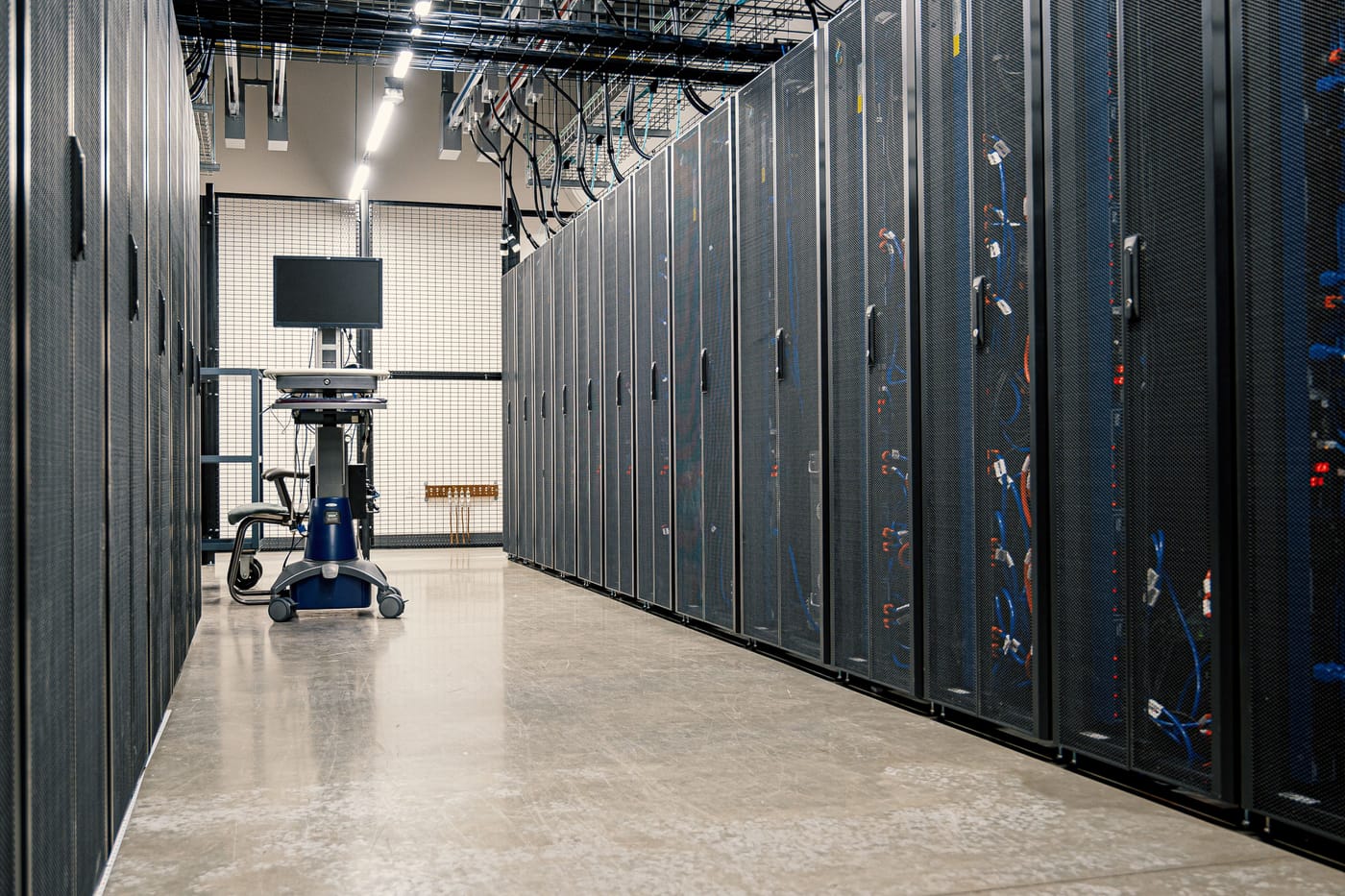
What a Data Cabling Project Looks Like Start to Finish
A typical project runs in the same order every time: a walkthrough to count drops and find pathways, a written quote with the cable grade and drop count spelled out, scheduling around your operations or your general contractor, the cable pull and termination itself, testing every link, then labeling and handing over documentation. You should know before we start how many drops you are getting, what grade of cable, where the rack goes, and roughly how long the work takes.
What the work involves
Every data cabling services project in Las Vegas follows the same basic sequence, scaled to the size of the space.
Walkthrough and drop count
We start in the space, not on a spreadsheet. We count the drops each area actually needs, look at where the rack or wall cabinet can live, check what pathways exist above the ceiling or inside walls, and note anything that will slow the job down — fire-rated walls, hard lids, concrete, or a landlord who needs to approve the route.
Cable selection and layout
With the drop count settled we pick the cable grade for each part of the job: copper to the work areas, fiber where a run is too long or too heavily loaded for copper. Runs are laid out to stay within distance limits, avoid electrical interference, and leave room for the drops you will want to add in two years.
Pull, terminate, and dress in
Cable is pulled along the planned pathways and supported properly rather than laid on ceiling tile or tied to sprinkler pipe. Each run is terminated to a jack at the work area and to a patch panel in the rack, then dressed into cable management so the front of the rack stays readable.
Test, label, and hand over
Every link is tested before we call the job done. Ports get matching labels at the jack and the panel, and you receive a port map showing which drop serves which location. That document is what makes the next change order cheap instead of exploratory.
Commercial spaces we support
We install data cabling across the Las Vegas Valley for professional and medical offices, dental suites, warehouses and distribution space, retail floors, restaurants, salons, light industrial buildings, and multi-tenant suites. Work ranges from a handful of added drops in an occupied office to a full rough-in on a new buildout. Beyond central Las Vegas we regularly work in Henderson, Summerlin, North Las Vegas, Spring Valley, Enterprise, and Paradise.
See every area we serve →Data Cabling FAQs
What is the difference between data cabling and structured cabling?
Structured cabling is a standards-based way of organizing data cabling — defined subsystems, consistent termination, and documentation, so the network grows predictably. Data cabling is the broader term for the physical runs themselves. In practice, when we install data cabling for a Las Vegas business we build it to structured cabling conventions, because unstructured cable becomes very expensive to work on later.
How much does data cabling cost in Las Vegas?
Pricing is driven by drop count, cable grade, run length, and how hard the pathways are to reach. An open ceiling with clear access is far quicker than hard-lid drywall or concrete. We quote per project after walking the space rather than posting a flat per-drop number, because a number quoted sight-unseen is usually wrong in one direction or the other.
Can you work in an office that stays open during the install?
Yes. Most of the occupied spaces we cable stay in business while we work. We stage the job area by area, keep pathways and walkways clear, and can schedule the noisier or more disruptive portions for evenings or weekends if your operation needs that.
How long does a data cabling installation take?
A small job of ten to twenty drops in an accessible space is often a single day. A full office rough-in of sixty or more drops usually runs several days, and buildouts get scheduled in phases around the other trades. We give you a realistic window with the quote rather than after the work starts.
Do I need to be there while the work happens?
Someone should be available at the start to confirm drop locations and where the rack goes, and at the end for the walkthrough and handoff. In between you do not need to supervise. For after-hours work we can arrange access with your building or property manager.
Will you work alongside my IT provider or general contractor?
Yes, and it usually makes the job go faster. We coordinate drop counts and rack space with IT teams so their switches and equipment fit, and we schedule rough-in with general contractors so cable goes in before walls close up. Tell us who to talk to and we will handle the coordination directly.
Related Services
Ethernet Cable Installation
Professional Cat6 and Cat6A ethernet cable installation for offices, warehouses, and commercial spaces across Las Vegas.
Learn more →Fiber Optic Installation
Commercial fiber optic cabling for high-speed network backbones, inter-building connections, and bandwidth-intensive environments.
Learn more →Commercial Data Cabling
Commercial data cabling for tenant improvements, office buildouts, and new construction. Coordinated with GCs and IT teams.
Learn more →Structured Cabling
Standards-based structured cabling systems for voice and data. Scalable infrastructure with proper documentation and cable certification.
Learn more →Cable Certification and Testing
Copper and fiber link testing with written results, so you know which drops pass, which fail, and exactly what needs fixing before you rely on them.
Learn more →LV Data Cabling provides data cabling services throughout Las Vegas, Henderson, North Las Vegas, Summerlin, Spring Valley, and the broader Las Vegas valley. View all service areas →
Request a Data Cabling Quote
Get a free quote for data cabling services in Las Vegas. We respond quickly with a straightforward estimate and no pressure.