
Cable Certification and Testing in Las Vegas
Testing tells you whether a cable is connected. Certification tells you whether it will actually perform at the speed it was built for. We test copper and fiber links for Las Vegas businesses and hand back written per-link results, so you know exactly which drops pass, which fail, and where the fault is.
Cable Testing and Certification for Business Networks
A link that lights up is not the same as a link that performs. A drop can pass traffic at 100 megabit while quietly failing at gigabit, or work fine until the office fills up and the errors start. Testing catches the obvious problems — a wire pair on the wrong pin, a run past distance limits, a break in the cable. Certification goes further and measures whether the finished link holds up to the performance standard its cable grade is supposed to meet. Which one you need depends on whether you are chasing a specific fault or signing off on a whole installation.
What's included
- Per-link testing across the copper drops in scope
- Fiber link testing on backbone and equipment runs
- Wire map, length, and continuity verification
- Fault location on failed or intermittent links
- Pass and fail results recorded per port
- A written report and updated port labeling
What a Certification Report Actually Tells You
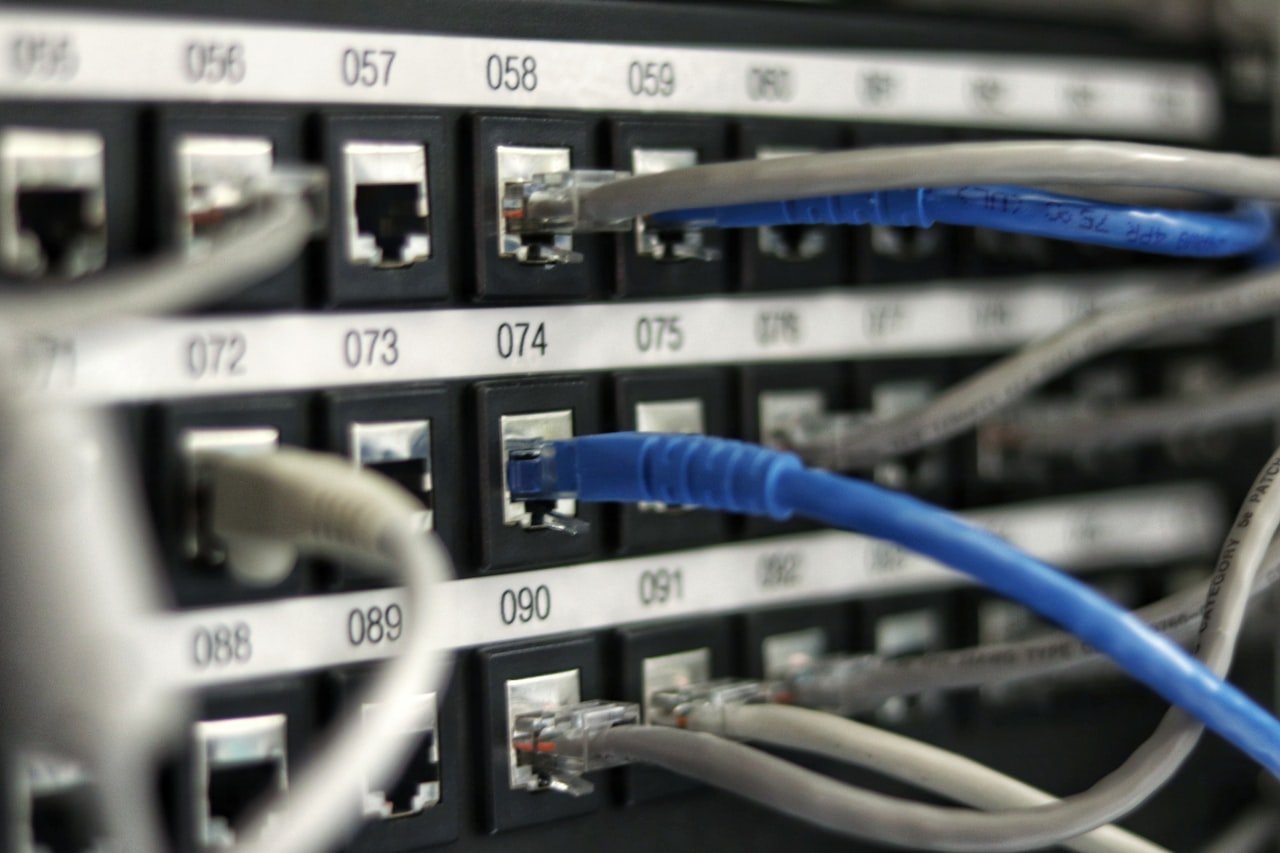
The useful output is not a verbal “it all checked out”. It is a record, port by port, showing what was measured and whether that port passed. That record tells your IT provider which drops they can trust, gives you something concrete to point at if a prior contractor left failing links behind, and becomes the baseline you compare against the next time something breaks. We hand over results tied to the same labels that are physically on the patch panel and the jack, so the paperwork and the hardware agree.
Good fit for
- Verifying cabling installed by a previous contractor
- Checking inherited drops before signing a lease or moving in
- Finding the cause of one desk that keeps dropping off the network
- Confirming a space is ready before new switches arrive
- Documenting an undocumented network closet
- Closing out a buildout that needs test results on file
Testing Existing Cabling Before a Move or Upgrade
The best time to test cabling you did not install is before you depend on it. If you are taking over a suite in Las Vegas, Henderson, or Summerlin, the drops left by the previous tenant are an unknown — they may be Cat5e described to you as Cat6, terminated inconsistently, or cut off somewhere in the ceiling. Testing before move-in turns that unknown into a drop count you can plan around, and it is far cheaper to find a dead run while the space is empty than during your first week of business.
Troubleshooting Failed Links and Intermittent Drops
Intermittent problems are the ones most worth testing for. A workstation that disconnects a few times a day, a camera that drops off overnight, a conference room that only fails when the room is full — these often trace back to a marginal link rather than the switch or the internet service. Testing locates the fault by distance along the run, so the repair is a specific point in a specific cable instead of a guess. If a run turns out to be unrecoverable, we can re-terminate or re-pull that drop rather than replacing cabling that is fine.
What the work involves
Every cable certification and testing project in Las Vegas follows the same basic sequence, scaled to the size of the space.
Scope and inventory
First we establish what is actually being tested. That means identifying the drops in scope, opening the network closet to see how many ports exist, and noting anything already labeled. On undocumented installs this step alone often turns up drops nobody knew were there and panels wired to nothing.
Link testing
Each link in scope is tested end to end for wire map, length, and continuity, and evaluated against the performance standard its cable grade should meet. Copper drops and fiber runs are handled separately because they fail in different ways and are measured differently.
Fault location on failures
A failed link is only useful information if you know where it failed. For failures we locate the fault by distance along the run so the problem narrows to a specific point — a bad termination at the panel, a damaged section mid-run, or a jack that was never punched down correctly.
Reporting and labeling
Results are recorded per port and handed to you in writing, with pass and fail marked clearly and notes on what was found. Where labeling is missing or wrong we correct it, so the report you keep matches the labels someone will read off the panel a year from now.
Commercial spaces we support
We test and certify cabling throughout the Las Vegas Valley — offices taking over a previously occupied suite, medical and dental practices verifying drops before equipment is installed, warehouses chasing a camera or scanner that keeps dropping, retail spaces closing out a buildout, and property managers documenting what is in a vacant unit before it leases. We cover Las Vegas, Henderson, North Las Vegas, Summerlin, Spring Valley, Enterprise, and Paradise.
See every area we serve →Cable Certification & Testing FAQs
What is the difference between cable testing and cable certification?
Testing verifies the link is wired correctly and connected end to end — wire map, length, continuity. Certification measures the finished link against the performance standard for its cable grade and returns a pass or fail per link. Testing answers whether it is connected properly. Certification answers whether it will perform at the speed it was sold as.
Do you provide a written report with the results?
Yes. You get results recorded per port, showing which links passed, which failed, and what was found on the failures. Results reference the same labels applied to the patch panel and the jacks, so the report matches what is physically in your closet.
Can you certify cabling that another contractor installed?
Yes, and that is a common reason clients call us. We test what is there and report what we find regardless of who installed it. If links fail, we tell you what is wrong and what it would take to fix — re-termination, a partial re-pull, or a full replacement of that run.
How long does it take to test an office full of drops?
Individual links test quickly; the time goes into access and setup. A small suite of twenty or thirty drops is typically a half day. Larger sites and anything with poorly documented or hard-to-reach panels take longer, which is why we look at the closet before quoting.
What happens if some of my cable runs fail?
We show you which ones failed and what the fault was, then explain the options. Many failures are termination problems that we can fix on the spot by re-terminating the jack or the panel port. Runs that are physically damaged or too long need to be re-pulled, and we quote that separately so you can decide.
Does testing prove my cabling is under a manufacturer warranty?
No, and it is worth being clear about that. Manufacturer warranty programs are separate arrangements between a cable manufacturer and contractors registered in their program, with their own component and submission requirements. What we provide is independent testing and written per-link results for your own records — not a manufacturer-backed system warranty.
Related Services
Ethernet Cable Installation
Professional Cat6 and Cat6A ethernet cable installation for offices, warehouses, and commercial spaces across Las Vegas.
Learn more →Fiber Optic Installation
Commercial fiber optic cabling for high-speed network backbones, inter-building connections, and bandwidth-intensive environments.
Learn more →Network Rack and Patch Panel Setup
Network rack installation, patch panel termination, and network closet organization for clean, manageable infrastructure.
Learn more →Structured Cabling
Standards-based structured cabling systems for voice and data. Scalable infrastructure with proper documentation and cable certification.
Learn more →LV Data Cabling provides cable certification and testing throughout Las Vegas, Henderson, North Las Vegas, Summerlin, Spring Valley, and the broader Las Vegas valley. View all service areas →
Request Cable Certification and Testing
Get a free quote for cable certification and testing in Las Vegas. We respond quickly with a straightforward estimate and no pressure.