
Fiber Optic vs Copper Ethernet: What Las Vegas Businesses Need to Know
Fiber optic and copper ethernet both have a place in commercial networks. Here is how to think about which one belongs where in your Las Vegas office or facility.
How Fiber and Copper Serve Different Roles
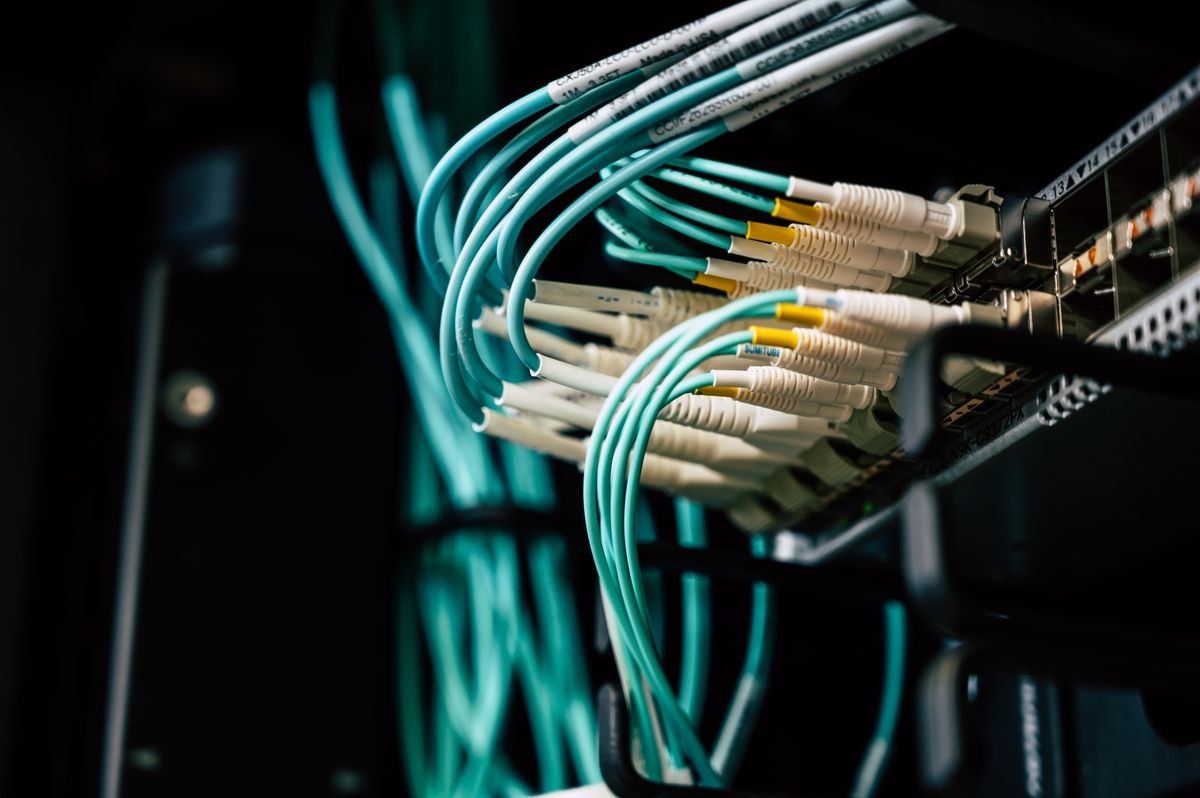
Most commercial networks use both fiber and copper — not one or the other. Copper ethernet (Cat6 or Cat6A) connects devices at the edge: computers, phones, cameras, and access points. Fiber handles the backbone: the high-speed connections between floors, between buildings, or between the main distribution frame and satellite network closets.
This division of labor makes sense for a few reasons. Fiber is immune to electrical interference and can span distances far beyond copper's 100-meter limit. Copper is cheaper, terminates easily into standard wall jacks, and connects to the standard ethernet ports on every device. Using each where it performs best is the foundation of structured cabling design.
Where Fiber Optic Makes Sense
Fiber belongs anywhere the run is too long for copper, where interference is a concern, or where bandwidth between network equipment needs to exceed what copper can support. The most common commercial use cases are building-to-building connections on a campus, floor-to-floor backbone runs in multi-story buildings, and high-speed interconnects between server rooms or data centers.
For Las Vegas businesses, fiber often appears in multi-floor office buildings, in large warehouse facilities where cable runs span hundreds of feet, and in any situation where the main distribution point is far from satellite network closets. Some high-bandwidth environments — video production, medical imaging, trading floors — also run fiber all the way to the desktop.
Related Services
Where Copper Ethernet Is the Right Choice
Copper is the right answer for device-level connections throughout a commercial space. Every computer, VoIP phone, IP camera, wireless access point, and network-connected device in a standard office environment connects via copper Cat6 or Cat6A.
Copper is less expensive to install, easier to terminate, and connects directly to the ethernet ports on end devices without requiring a transceiver or conversion hardware. For runs under 100 meters — which describes most workstation drops in typical commercial spaces — copper delivers gigabit performance reliably.
The Typical Las Vegas Office Network Design
A typical single-floor commercial office in Las Vegas uses copper throughout. Cat6 cable runs from each workstation, phone, access point, and camera to a patch panel in a network closet. The patch panel connects to switches. The switches connect to a firewall or router, which connects to the ISP.
For a multi-floor office, fiber backbone cables run from the main IDF on one floor to satellite IDFs on each other floor. Copper then runs from each satellite IDF to the workstations on that floor. This design keeps the high-speed interfloor connections on fiber and the device connections on copper.
When to Plan a Fiber Upgrade
If your network is struggling with throughput between floors or between buildings, and your copper backbone is the bottleneck, a fiber upgrade is likely the right investment. Fiber backbone upgrades are also worth considering when you are expanding to a new floor or building and need to connect it to your existing network.
We can assess your current setup and tell you whether fiber makes sense — and if so, what type, how many strands, and where it should terminate. If copper is sufficient for your current and planned configuration, we will say so rather than sell you fiber you do not need.
Have a data cabling project in Las Vegas?
We provide free estimates for ethernet, fiber, WiFi, VoIP, and low-voltage cabling across the Las Vegas valley. Call us or request a quote online.
Related Services
Network Cabling Services
Structured network cabling for offices, clinics, and warehouses. Built for reliability with proper testing, labeling, and documentation.
Learn more →Fiber Optic Installation
Commercial fiber optic cabling for high-speed network backbones, inter-building connections, and bandwidth-intensive environments.
Learn more →Structured Cabling
Standards-based structured cabling systems for voice and data. Scalable infrastructure with proper documentation and cable certification.
Learn more →Need data cabling in Las Vegas?
Las Vegas Data Cabling provides ethernet, fiber, WiFi, VoIP, and low-voltage cabling for businesses across the Las Vegas valley. Get a free quote.